
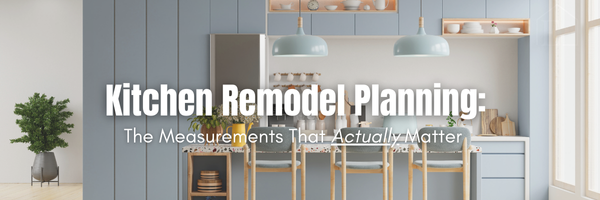
If you’re dreaming of a Pinterest-worthy kitchen, it's not just about beautiful finishes or trendy tile - it’s about function. And function starts with smart measurements.
Let’s break down the kitchen design numbers that really matter to help you avoid costly changes once your reno is underway.
👣 Clearances + Traffic Flow
-
Between Counters or Walls:
42–48 inches is the gold standard for clearance between counters. If you're tight on space, 36" is the bare minimum, but be prepared to sacrifice comfort. -
Behind Island Seating:
Planning stools at your island? Leave 36–48 inches behind them for smooth walkways. Anything less means a tight squeeze and daily chair shuffles. -
Sink to Stove Distance:
The sweet spot for easy movement is 48–60 inches between your sink and stove. Too close, and you’re cramped; too far, and cooking feels like cardio. -
Appliance/Door Clearance:
Leave 21–24 inches in front of appliances and drawers so nothing bumps, blocks, or bangs into something else. -
Work Triangle? Still Relevant.
The "work triangle" (sink, stove, fridge) is less trendy now, but the concept of functional flow is timeless. If it feels awkward to move between stations, your body will notice long before your brain does.
🧱 Cabinets + Counters: Get the Details Right
-
Countertop Slab Sizes:
Standard slabs measure about 130" x 64"
Jumbo or XL slabs = 130" x 75"
Your fabricator will also need at least 1" extra to account for cut waste and edge prep. -
Base Cabinet Depth:
The industry standard remains 24 inches -
Upper Cabinet Depth:
Traditionally 12", but modern designs often use 13–15" for better storage and visual balance. -
Upper Cabinet Height from Countertop:
Leave 18–20 inches of space between the counter and the bottom of your upper cabinets—enough for a coffee maker and elbow room. -
Cabinet Toe Kick:
Standard height is 3–4 inches for comfortable standing and smooth vacuuming.
🛠️ Key Landing Zones
Leave flat surface areas next to key appliances. These are not just nice-to-haves—they’re safety and convenience essentials.
-
Cooktop:
Leave 12" minimum on one side, 15" on the other side for pan handles, prep bowls, and rest areas. -
Sink:
Ideally, you’ll want 24" of clear counter on one side, 18" on the other. This makes space for drying racks, dish piles, and prep work. -
Trash Pullout:
It should go where your body naturally moves during prep—not where it just “happens to fit.” Typically, this means near the sink or between the prep zone and cooking zone. -
Pendant Spacing Over Island:
Pendants should be spaced 30–36 inches apart and start 12 inches in from each end of the island for balanced lighting.
🧾 Final Word: Plan Now, Save Later
Design changes on paper? Easy. Design changes mid-build? Expensive.
The earlier you understand your space, workflow, and measurements, the more seamless your remodel will be. These numbers aren’t just builder talk—they’re the difference between a kitchen that works and one that just looks good.
Thinking about a remodel or wondering what upgrades make the biggest difference when it comes to resale?
Let’s chat. I’d be happy to help you plan strategically whether you're prepping to sell or making your forever home work better for you.
Happy Designing!


Post a comment